
The present work is protected by copyright in all its parts.
© 2020 by Heinz Hermann Maria Hoppe.
All rights reserved.
Comment
Author: Heinz Hermann Maria Hoppe
June 2020: The world still seems paralyzed. It is a matter of life, death and a lot of money. The ranking of sick, dead and economic figures in the press diagrams continues. Worldwide, people’s fears and hopes are unequally distributed. Some cannot breathe, fear for their existence and their future. Others worry about bonus payments or make a profit from the situation. Governments seem powerless and experiment with billions to fight recessions. An unknown was born in China a few months ago and has crossed our lives: ‘Corona’.
Mass moving upheavals, disasters and key moments are translated into images. Ideas in the air, religious, humanistic and political upheavals, technical inventions and the spirit of the times interact with the forms of expression in art. Without changes within the visual languages there would be no art history. Even with the beginning of the coronavirus SARS-CoV-2 pandemic, snapshots, signs and drawings, videos and works of art were published within a very short period of time, all dealing with the new virus.
There have always been artistic reactions to moving events in people’s lives, starting with the depiction of hunting scenes in cave paintings. But how were and how are they created? How timeless are our forms of expression? How, for example, would a classical painter have brought current events onto the picture surface? If one could travel back in time with a ‘visual time machine’, how would a previous artist have depicted the current pandemic? Are modernist abstractions more advanced than the realistic representations of earlier centuries? Is there any progress in art at all or does everything come back in an endless loop?
Metaphors tell, interpret and help to process experiences. On canvases stories are told and abstract facts are illustrated. In painting and sculpture allegorical representations have been common since antiquity. In those days most people could not read scriptures, but they could read pictures: about the work of the gods, the crucifixion, the heroic deeds of the powerful, the beauty of nature and exotic journeys to faraway countries. Allegories were also painted in the fine arts of the Renaissance.
Wisdom and beauty were central themes. After the gloomy depictions of the Middle Ages, humanistic ideals were reborn in the Renaissance and turned the pictorial moods into their opposite. Art recalled the humanist ideals of Greek and Roman antiquity in the form of new perspectives, proportions and light-flooded scenes. Earthly existence again became the centre of attention for people.
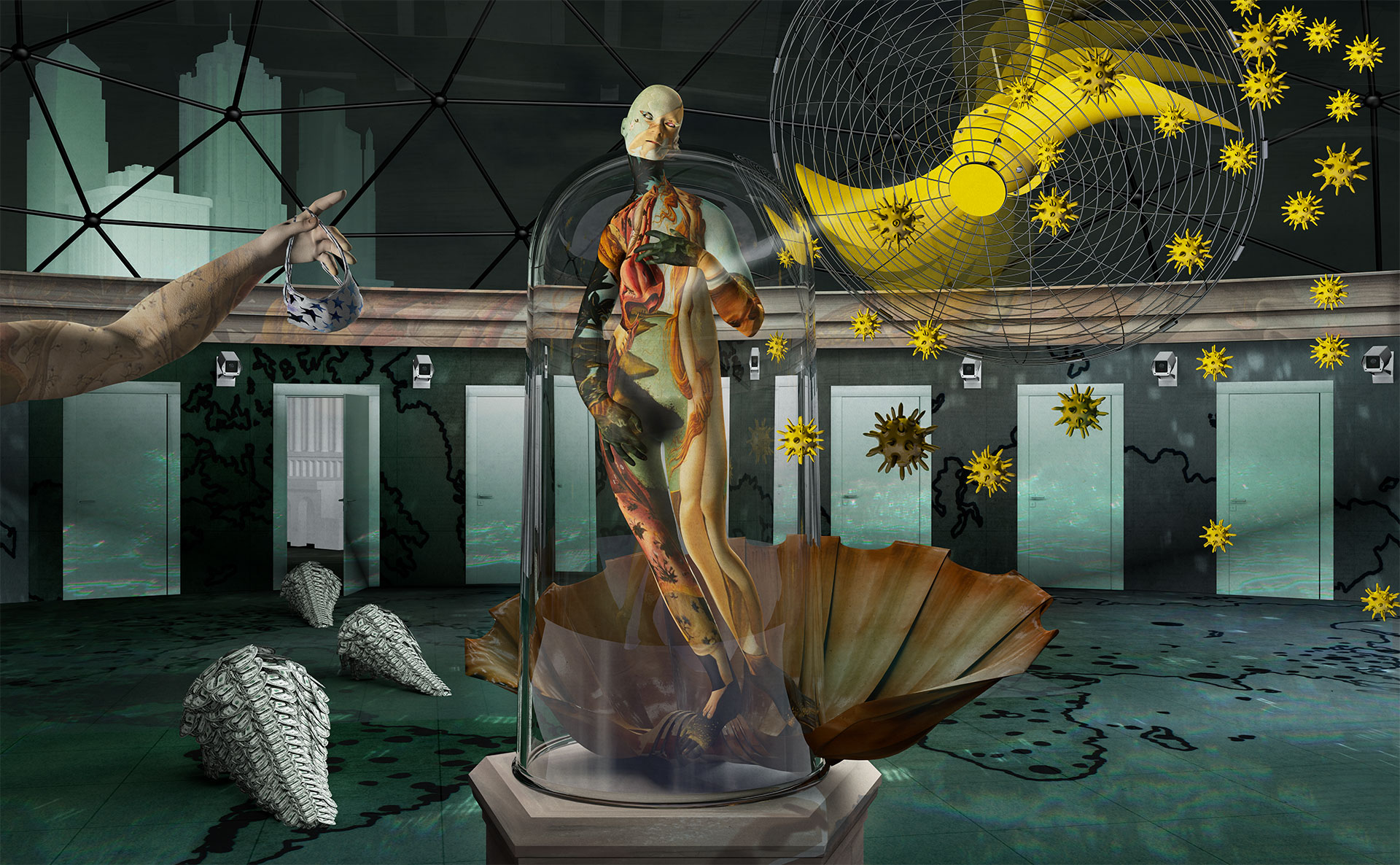
The ‘Birth of Venus’ by Sandro Botticelli, painted around 1485, is considered a key mythological work of the early Renaissance. The painting celebrated the beauty of the naked female body for the first time since antiquity. The painting was preceded by a pandemic in the middle of the 14th century: The plague, the ‘Black Death’, had killed an estimated 25 million people, a third of the world’s population at that time.
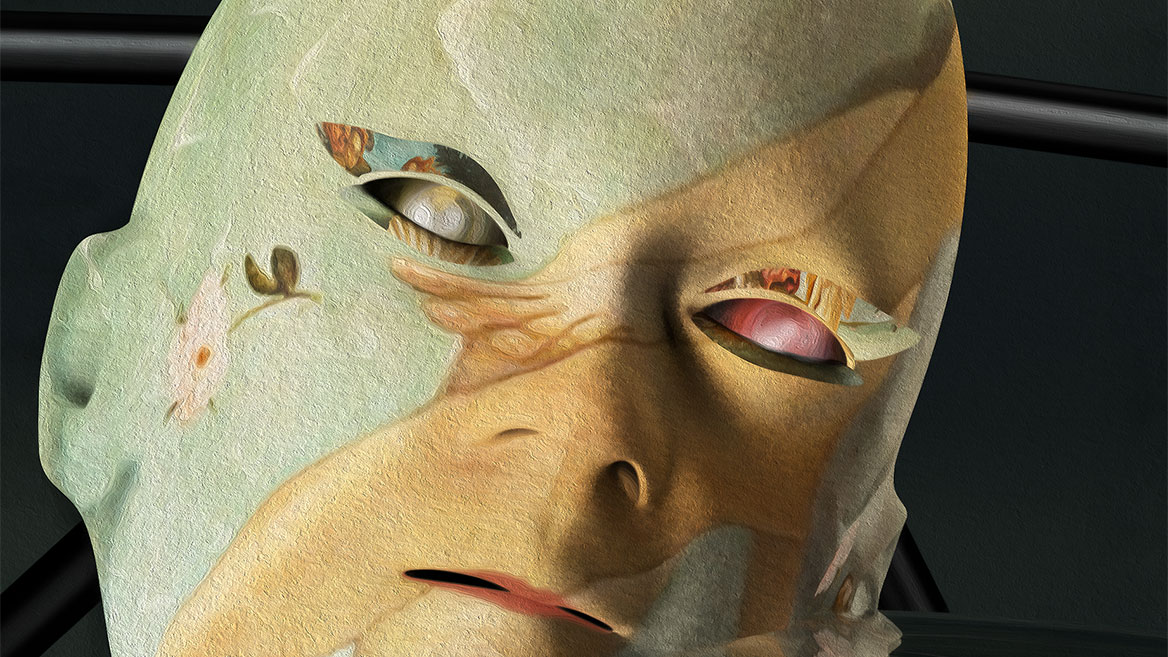
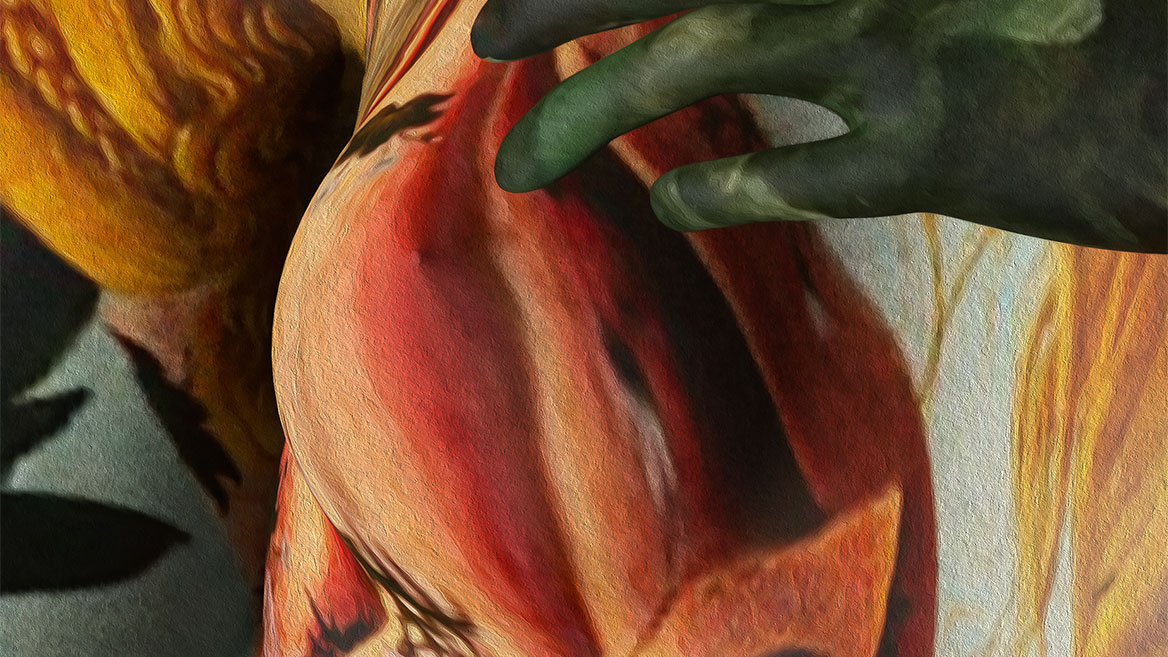
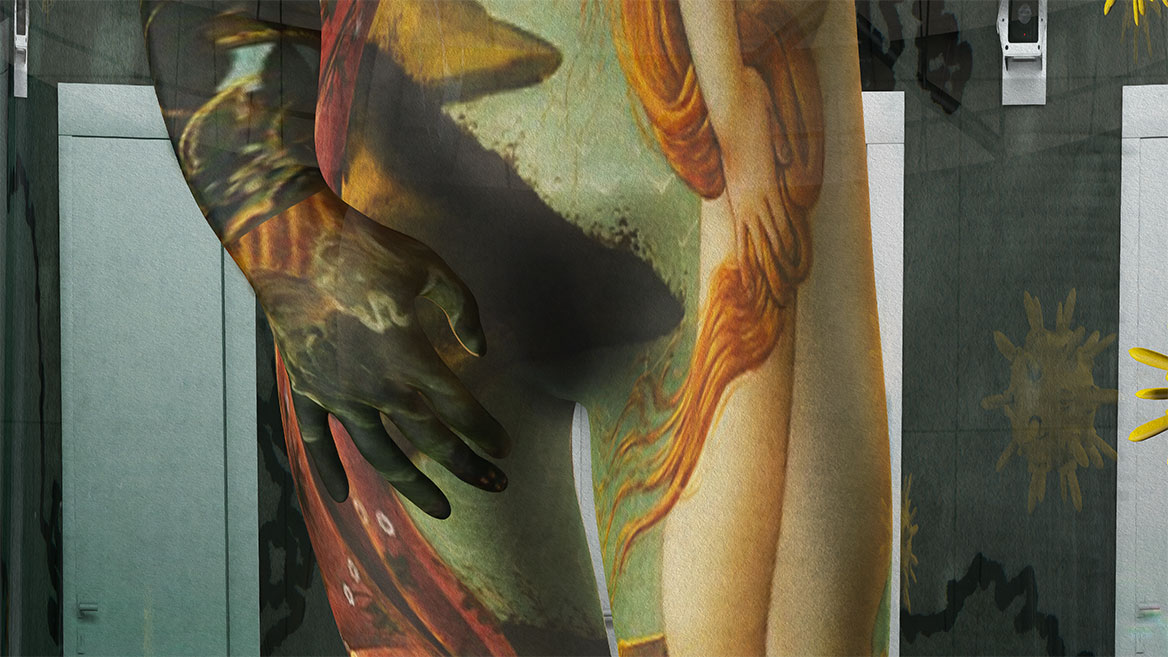
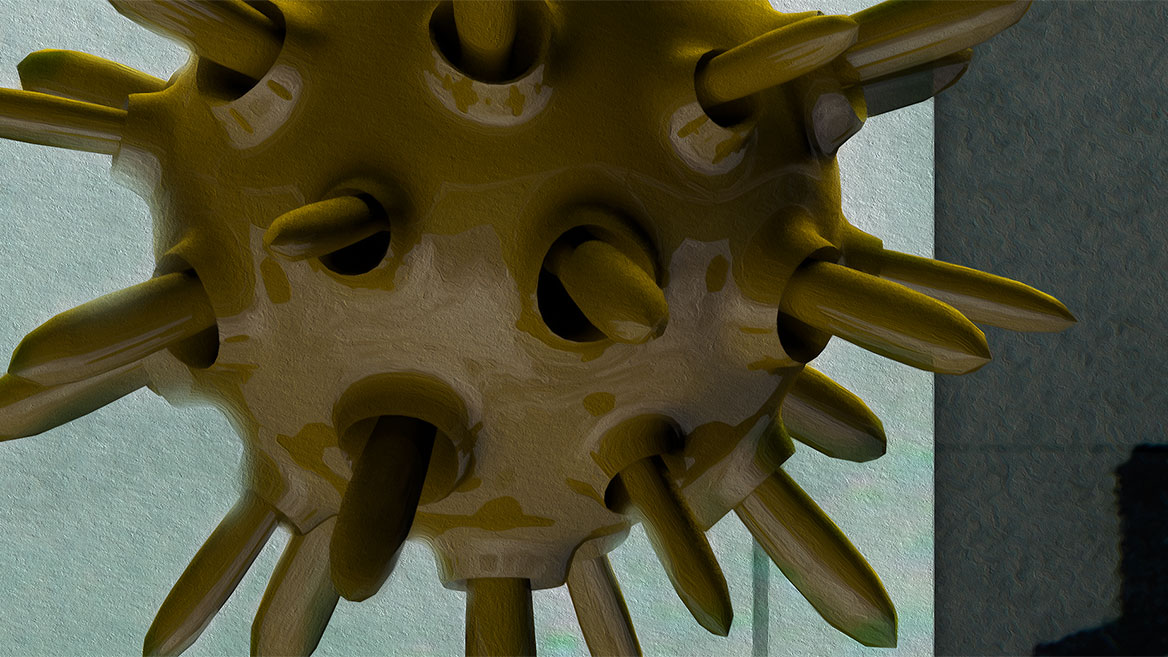
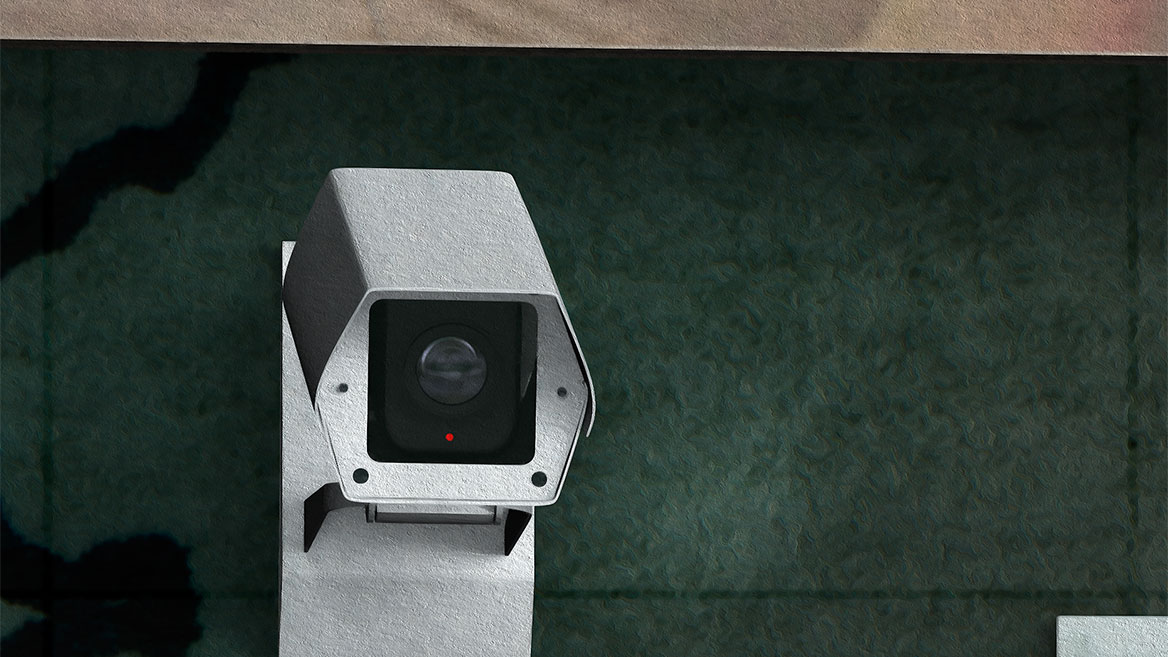
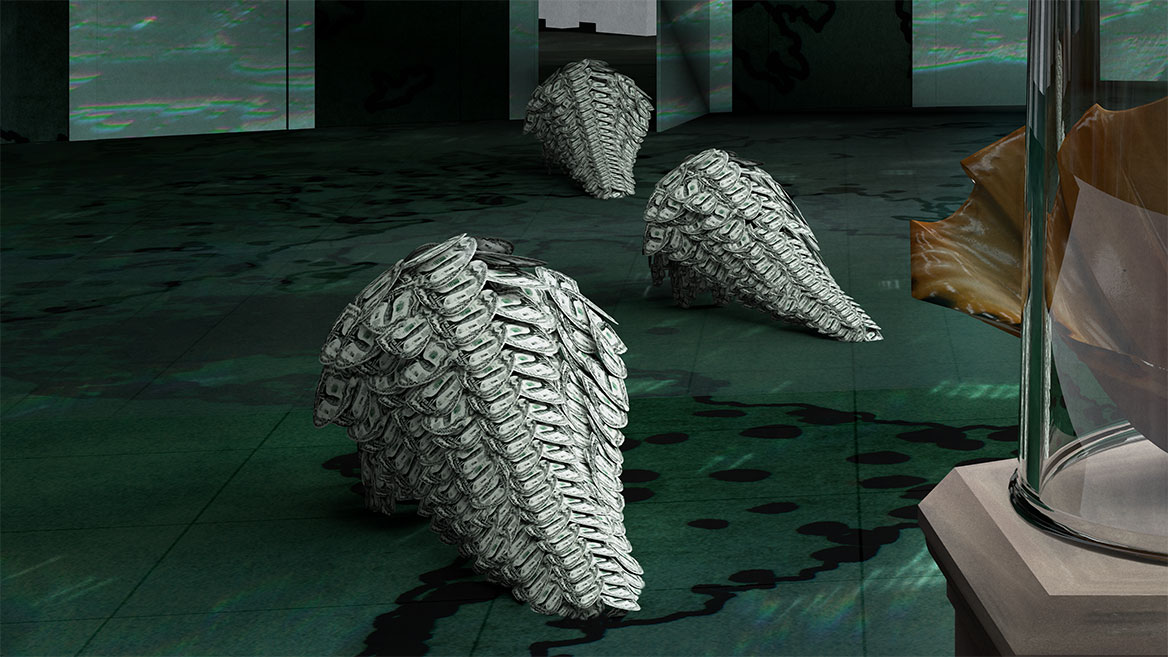
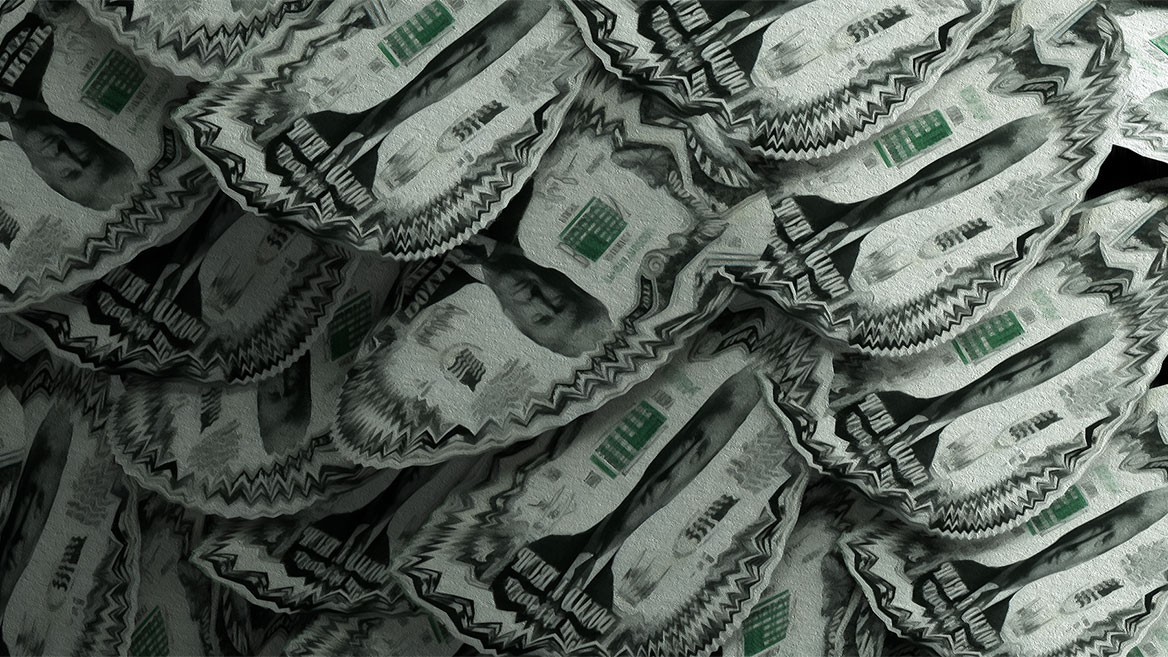
To digitally interpret the current events of the corona pandemic with ‘artistic paintbrushes’ was a visual experiment. The composition symbolically charges the worldwide event. ‘Birth of Corona’ is a free, visual transcription of ‘La nascita di Venere’ – painted in 3D space instead of egg tempera on canvas.
Why a backward-looking time travel, why not a forward-looking search for a new form of expression? Because a great leap into the past of image creation also sharpens the eye for creeping changes in the present. We can no longer see through the effects of a completely different plague, a kind of ‘visual plague’: the inflationary use of empty and superficial images litters our brains. Effect images automatically calculated by artificial intelligence and apps flood all media channels and reflect our visual culture.
I find the idea of re-coding the present with more than 500-year-old set pieces and painting a kind of continuation in 3D space fascinating. The theatricality of the painting may seem ‘mannerist’ to some viewers. The reproach of a ‘kitschy’ impression was also raised for ‘Birth of Venus’. On the other hand, Botticelli’s work seems to have been important for centuries. Symbols do not always go hand in hand with shades of colour.


Further Information: